New York's Construction Reporting Pay Act takes effect December 8, 2026. It sets four hours of reporting pay and two hours for a shift cancelled on short notice. It is a pay law, not a licensing law.
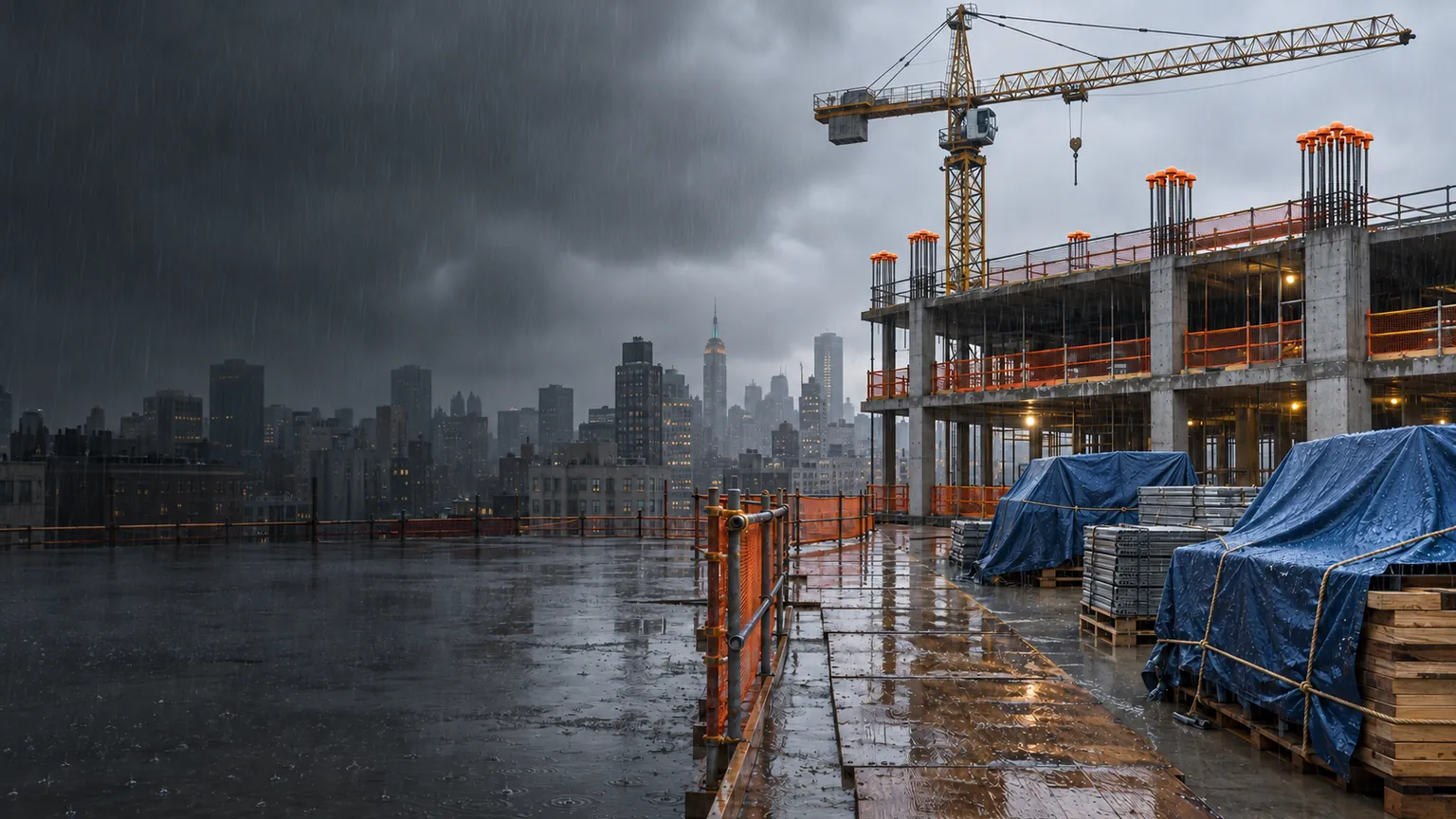
New York's Construction Reporting Pay Act takes effect December 8, 2026. It says a construction worker who reports for a shift has to be paid for at least four hours, or the scheduled shift if it is shorter, and a worker whose shift is cancelled on less than twelve hours' notice has to be paid for two hours. It was signed September 9, 2026, as Chapter 291 of the Laws of 2026.
This is a pay law, not a licensing law. It does not change who may hold a contractor license or how a company qualifies. This article lays out what the act says, when it starts and who it covers, then turns to licensing as a separate topic. For how New York licenses contractors, start with our New York contractor license page.
At a glance
- The act: the Construction Reporting Pay Act, Assembly Bill A6950 and Senate Bill S9843, signed September 9, 2026 as Chapter 291.
- Starts: December 8, 2026, the ninetieth day after it became law.
- Reporting pay: a construction employee who reports for work at the employer's request or with permission is paid at least four hours, or the scheduled shift if it is shorter, at the promised hourly wage.
- Cancelled shift: a shift cancelled on less than twelve hours' notice is paid two hours.
- Prevailing wage projects: the same two rules apply at the prevailing rate of wages, including supplements.
- Not about licensing: the bill text we read says nothing about contractor licenses.
What the act says
The act adds two sections to the New York Labor Law. Each has the same two rules.
Reporting pay. An employee engaged in construction who reports for work on any day, at the employer's request or with permission, is paid for at least four hours, or the number of hours in the regularly scheduled shift, whichever is less, at the employee's promised hourly wage. That is section 196-e.
Cancelled shifts. An employee scheduled to report whose shift is cancelled on less than twelve hours' notice is paid for two hours at the promised hourly wage. Payments under that section count as wages under the Labor Law.
Prevailing wage projects. A second section, 224-g, repeats both rules for laborers, workers and mechanics employed by a contractor on construction projects covered by the state's prevailing wage rules. There the pay is at the prevailing rate of wages, including supplements, for the worker's regular classification of work. The one exception in the text is that this section does not apply where the posted prevailing wage already provides greater reporting pay, wages or benefits.
The act states a reason in its own words: employees in construction "are entitled to the same scheduling, reliability, and predictability as other fields of employment."
Weather, permits and stalled jobs
A law firm summary from FordHarrison, published November 18, 2026, says sending workers home or cancelling shifts for bad weather, permit and inspection delays or inaccessible work sites may not remove the duty to pay.
That is the firm's reading. The bill text as introduced, which is the version we read, does not mention weather, permits or inspections. It turns on two things: a worker reported for work, or a shift was cancelled with less than twelve hours' notice. It does not ask why.
Who is covered
Section 196-e covers an employee "engaged in construction" as the Labor Law defines it in section 861-b. The law firm summary says that definition includes constructing, altering, maintaining, repairing, renovating and demolishing a building, structure or improvement, plus excavation and other work on land. The firm says general contractors, subcontractors and trades such as electrical, plumbing, HVAC, carpentry, roofing and masonry are generally covered, that the act applies to union and non-union employees and to public and private projects, and that coverage depends on the work actually being done. We have not read section 861-b itself, so check the definition before relying on that list.
What the act does not say
The bill text as introduced lists no fines or penalties. The law firm summary says an employer that does not comply could owe back pay, liquidated damages, attorneys' fees and interest, going back up to six years. That is the firm's reading of how wage claims work, not language in the act. The act allows rules to carry it out to be made before the start date. We found no Department of Labor rules or guidance under it as of November 23, 2026.
The dates
- September 9, 2026: signed as Chapter 291.
- December 8, 2026: the act takes effect, the ninetieth day after it became law.
Nothing in the act is in effect before December 8.
Is this a licensing change?
No. The act is about pay for hours. It does not mention a contractor license, a qualifier or a licensing board, and no source we read connects it to licensing.
Licensing in New York is its own subject. Our New York contractor license page says "New York has no statewide contractor license: licensing lives at the city and county level, and New York City is the jurisdiction that matters most." It also notes that since December 30, 2024 the State Department of Labor has required contractors who bid on or perform public work, and certain private projects covered by Article 8 of the Labor Law, to register with it, and that this is a registration, not a license. That registration is a different rule from this act.
For companies that want to work in New York
If your company puts crews on New York jobs, the Construction Reporting Pay Act is a scheduling and payroll topic your payroll provider or a New York employment attorney can walk you through. Licensing is a separate question, and it depends on the city or county where the work happens.
That second question is the one we work on. The Licensing Company places licensed qualifying agents with contracting companies as full time W-2 employees and prepares the qualifier filing. If you want to talk through a license for your company in New York, contractor qualifier services explains how the process works, or call 615-219-2110. Not a promise, the board decides.
Frequently asked questions
When does the Construction Reporting Pay Act take effect? December 8, 2026, the ninetieth day after it became law on September 9, 2026.
How much is a worker paid when sent home? A construction employee who reported for work is paid for at least four hours, or the regular shift if it is shorter, at the promised hourly wage. On prevailing wage projects the pay is at the prevailing rate, including supplements.
What if a shift is cancelled the night before? If it is cancelled on less than twelve hours' notice, the employee is paid two hours. With twelve hours' notice or more, the text sets no cancellation pay.
Does this change contractor licensing in New York? No. The act is about pay. The bill text we read says nothing about licenses.
Does it cover workers on public jobs only? No. The law firm summary says it applies to public and private projects and to union and non-union employees. Prevailing wage projects follow section 224-g.
This article is general education, not legal advice. A New York employment attorney or the New York State Department of Labor can confirm how the act applies to you, and the enacted chapter text is the final word.
Marshall Schofield and Jeremiah Jaskulski are both licensed general contractors, master electricians, master plumbers and master mechanical contractors. Marshall is one of the nation's leading contractor exam prep instructors. Together they founded The Licensing Company, and they help contractors get licensed the right way in New York and nationwide. Sources: the New York State Assembly's page for bill A6950, the New York State Senate's page for bill S9843, and the law firm FordHarrison's November 18, 2026 summary.
Disclaimer: This article is provided for educational and informational purposes only. It does not constitute legal advice, licensing guidance, or an offer of services. Licensing requirements vary by jurisdiction. For specific compliance questions, contact The Licensing Company for a confidential consultation.
Tell us the state and the trade. A member of the team calls you back.
We confirm what your board requires for your situation, then match a licensed qualifier who joins your company as a full time W-2 employee. Rather talk now? Call 615-219-2110.
Tell us your state and trade
A member of the team calls you back from 615-219-2110.