WINK News reported three default judgments, about $220,000 together, against a Naples pool company, plus a state order for unlicensed practice. What was reported and what Florida law says.
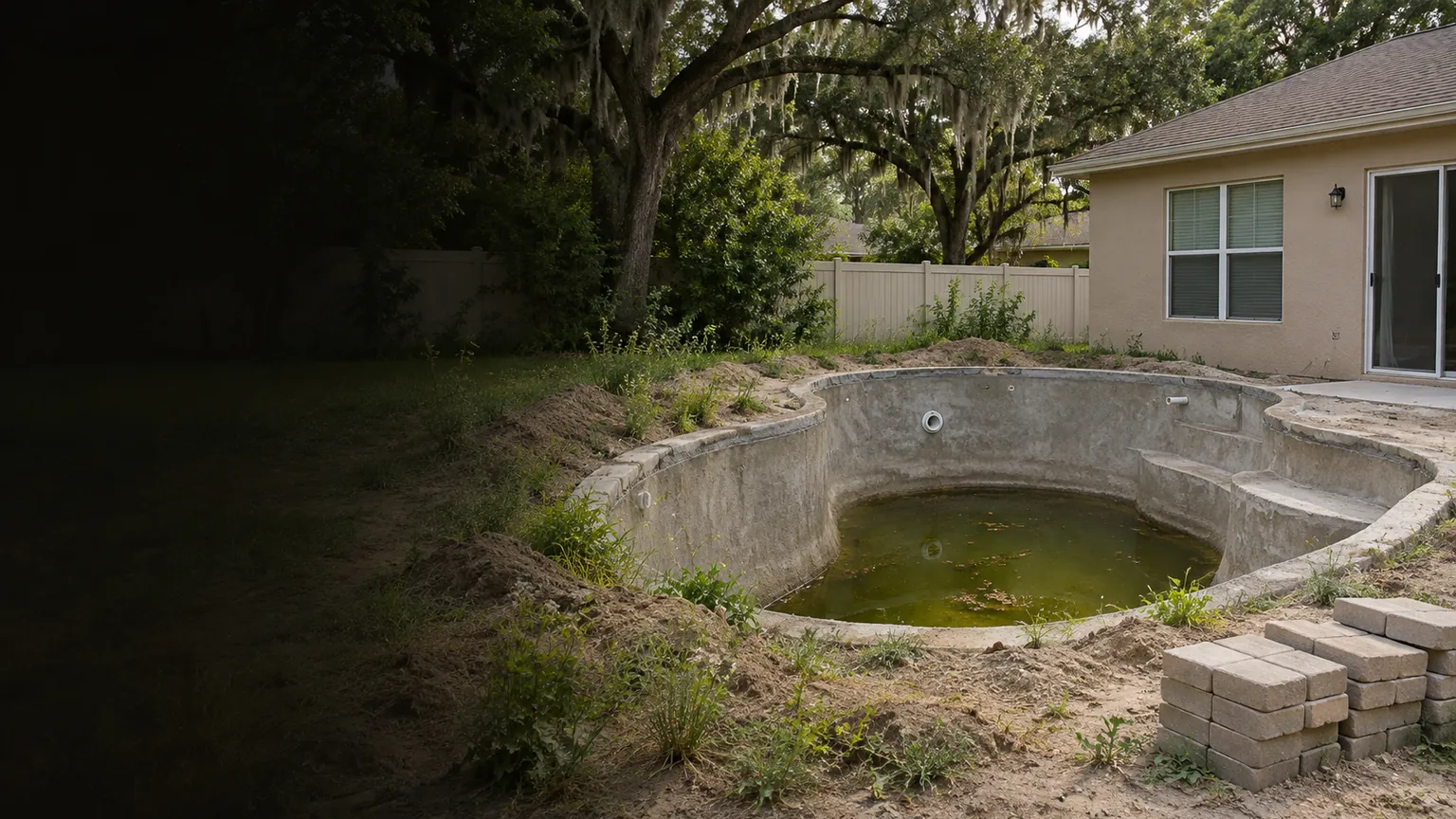
On November 16, 2026, WINK News reported three default court judgments, about $220,000 together, against a Naples pool company that customers say left them with unfinished pools and unpaid subcontractors. WINK also reported that in May 2026 the state's licensing department issued a final order against the company's owner for the unlicensed practice of a regulated profession. This article names no one, and WINK said the owner could not be reached for comment.
This is a story about what unlicensed or unpaid work costs the people around it: homeowners, suppliers and subcontractors. It covers what WINK reported from court and state records, what Florida's statute says about contracting without a license, and what it means for a company that wants to work in Florida the right way. For the licensing basics, start with the Florida contractor license page.
At a glance
- What happened: WINK News reported on November 16, 2026 on three default final judgments entered between November 2025 and February 2026 against a Naples pool company, totaling about $220,000, in favor of a maintenance company and two suppliers.
- What a default judgment is: the court entered it after the company did not contest the suit. It is a court finding of what is owed, not a criminal case.
- The state's order: in May 2026 the Florida Department of Business and Professional Regulation (DBPR) issued a final order against the company's owner after an administrative complaint for the unlicensed practice of a regulated profession, with administrative fines and investigative costs, WINK reported.
- What customers say: they paid tens of thousands of dollars, and some were left with liens from unpaid subcontractors. These are customers' accounts and accusations. The owner could not be reached for comment.
- Not confirmed: we did not read the court dockets or the DBPR order ourselves. The account rests on WINK's reporting of those records.
What the court records show, according to WINK
WINK reported three default final judgments against the company. Together they add up to $221,695.29.
- $172,500, entered in December 2025 by a Lee County Circuit Court judge, for unpaid excavation, backfilling and material delivery on a resort job.
- $37,858.36, entered in February 2026 by a Collier County judge, including treble damages. It names the company, its owner and a former business partner together. It followed two checks from July 2025 that were returned for insufficient funds. A writ of garnishment against a bank was sought in June 2026.
- $11,336.93, entered in November 2025 by a Collier County judge, against the same three, over unpaid drywall and building supplies. A writ of garnishment was issued to a bank in March 2026.
The three who won are a maintenance company, a pool supplies distributor and a building materials supplier. On October 6, 2026, WINK reported, the Lee County judge granted a motion to show cause because court ordered financial disclosures had not been filed.
What the state's order says, according to WINK
In May 2026, WINK reported, DBPR issued a final order against the owner after an administrative complaint for the unlicensed practice of a regulated profession. It imposed administrative fines and investigative costs. WINK does not give the amounts, and it does not say which section of Florida law DBPR used. A court judgment for unpaid bills and a state order are two separate things, and we are not linking them to each other. No source does.
What customers told WINK
A Cape Coral couple were quoted about $74,000 for a pool, paid $60,000, and paid a second contractor about $70,000 to finish it. WINK reported that the permit application the company sent to the city listed another company's license credentials, and that Cape Coral Code Enforcement stopped the work. A Naples homeowner said he paid more than $100,000, that subcontractors then put liens on his home, and that two company checks from January 2026 totaling $19,200 were dishonored. A retiree said he hired the company in 2024 on a $105,000 quote, waited eight months for a permit, and lost contact with the owner in June 2025. A hauler who says he is owed more than $4,000 told WINK he chose not to sue because legal fees would use up what he is owed.
All of this is what people told the station. None of it is a finding about anyone, and the owner could not be reached: WINK said the business number was disconnected and emails and calls went unanswered.
What Florida's statute says about contracting without a license
We read section 489.127 of the Florida Statutes on the Legislature's website on November 23, 2026. We describe it in general, as it reads. It is not a list of what this case alleges.
- What it bars. Contracting or advertising contracting services without the required registration or certification, starting work that needs a building permit without the permit in effect, and falsely holding a business out as licensed.
- The criminal penalty. An unlicensed person who violates it "commits a misdemeanor of the first degree." A repeat violation, or one during a governor declared state of emergency, is "a felony of the third degree."
- Stop work orders. DBPR may issue a stop work order on probable cause of unlicensed work.
- Local citations. Code enforcement officers can cite a violation. A local schedule can set a civil penalty up to $2,000 for the citation itself, and a hearing body can impose up to $2,500 per day for each violation. Unpaid orders can become liens on the violator's property, except a homestead.
For companies that want to work in Florida
Our Florida contractor license page says: "Florida requires a Qualifying Agent for all licensed contractor entities." That is the plain starting point. In Florida a business that contracts operates through a licensed qualifying agent. A qualifying agent qualifies a company, and the state holds that seat to real duties.
The point of this story for a contractor weighing Florida is simple. The work is not done when the contract is signed. Suppliers get paid, permits are real, and the license behind the job is the state's check that the business can stand behind it. Whether a particular company can qualify depends on the person and the state. Not a promise, the board decides.
Marshall Schofield and Jeremiah Jaskulski each hold general contractor, master electrician, master plumber and master mechanical licenses, and they built The Licensing Company around helping contractors qualify the right way. If you work in several states, contractor qualifier services explains how The Licensing Company helps with that.
Frequently asked questions
What did WINK report? On November 16, 2026, WINK News reported three default judgments, about $220,000 together, against a Naples pool company, and a May 2026 DBPR final order against its owner for the unlicensed practice of a regulated profession.
What is a default judgment? A court enters one when the other side does not contest the suit. It is a court finding of what is owed. It is not a criminal case.
Was anyone found guilty of a crime? WINK's report does not mention a criminal case. The state order reported was administrative, with fines and investigative costs.
What does Florida law say about contracting without a license? Section 489.127 makes it a first degree misdemeanor, and a third degree felony on a repeat violation or during a declared state of emergency. DBPR can issue stop work orders, and local code enforcement can cite violations.
Does this story involve a qualifying agent? No source reported one. We cover the qualifying agent seat because it is how Florida licenses a contracting business.
Can I get my money back from a contractor who did not finish? That is a legal question. A Florida construction attorney or DBPR can say how the law applies to a specific job.
This article is general education, not legal advice. The Florida Department of Business and Professional Regulation or a Florida construction attorney can confirm how the law applies to a specific business.
Marshall Schofield, one of the nation's leading contractor exam prep instructors, has helped thousands upon thousands of contractors get licensed. Jeremiah Jaskulski is a licensed contractor who has lived the licensing process across multiple states. Together they founded The Licensing Company, and they help contractors get licensed the right way in Florida and nationwide. Sources: the WINK News report of November 16, 2026, and Florida Statutes section 489.127 on the Florida Legislature's website, read November 23, 2026.
Disclaimer: This article is provided for educational and informational purposes only. It does not constitute legal advice, licensing guidance, or an offer of services. Licensing requirements vary by jurisdiction. For specific compliance questions, contact The Licensing Company for a confidential consultation.
Tell us the state and the trade. A member of the team calls you back.
We confirm what your board requires for your situation, then match a licensed qualifier who joins your company as a full time W-2 employee. Rather talk now? Call 615-219-2110.
Tell us your state and trade
A member of the team calls you back from 615-219-2110.