Delaware's Department of Justice filed an administrative complaint against a home improvement company. What the state alleges, what it asks for, and what Delaware requires of contractors.
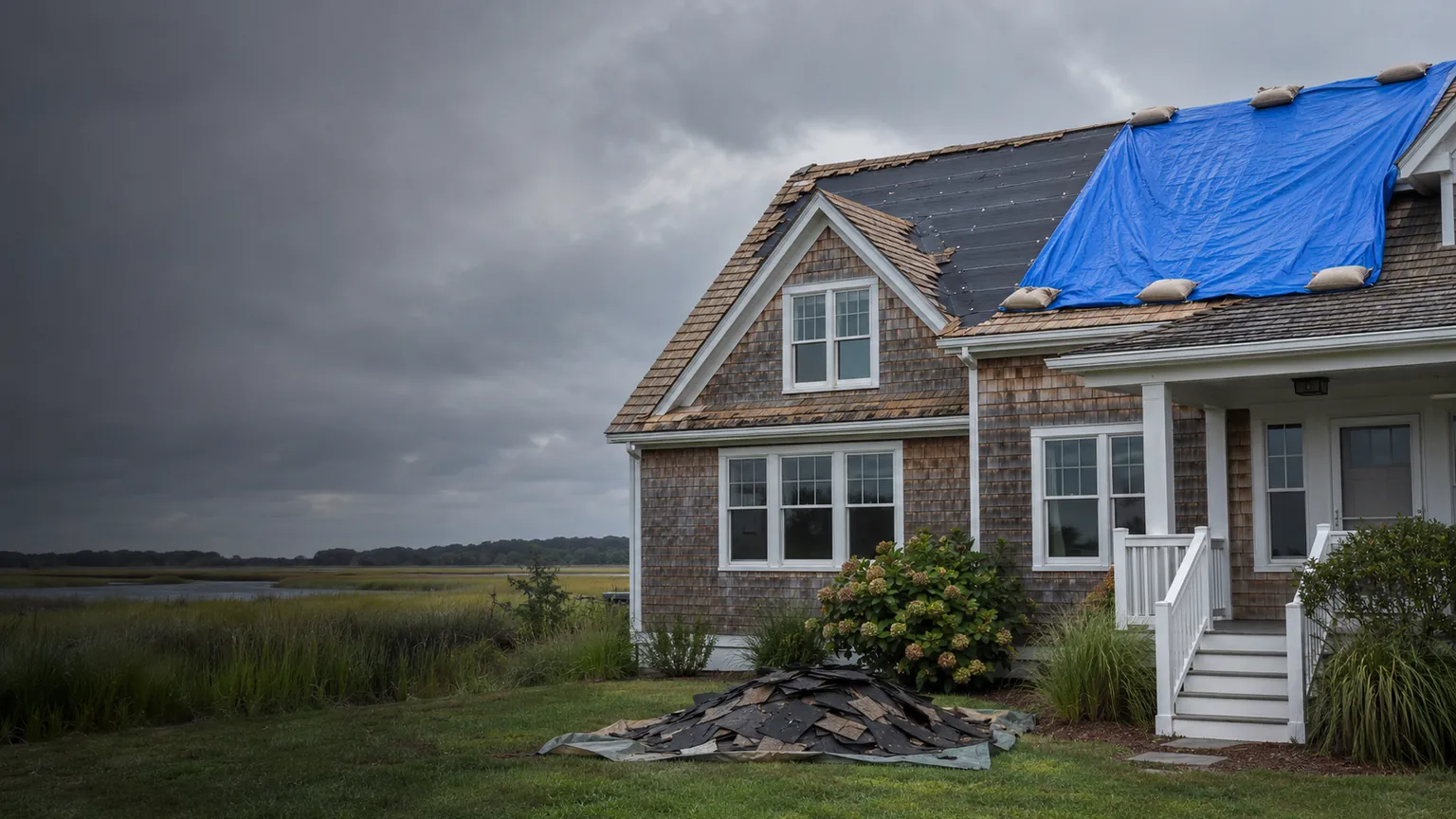
Delaware's Department of Justice has filed an administrative complaint against a Delaware home improvement company and its two owners. The state alleges the company's door to door salespeople told homeowners they had to sign a form to get a "free" inspection, and that the form was really a binding contract with cancellation penalties. The Attorney General announced the filing on October 27, 2026, and the complaint is dated October 20. These are allegations. The company and its owners are entitled to a hearing, and a state hearing officer decides. We do not name them here.
This is a consumer protection story, not a licensing story. Neither the state's release nor its complaint says the company lacked a contractor license or a registration, and we do not say that either. What the filing does show is how much of a Delaware home improvement job the state regulates, from the contract to the sales visit to the claims a company makes about itself. Delaware also has separate licensing and registration steps for contractors, and this article covers both layers. For the licensing picture, start with the Delaware contractor license page.
At a glance
- Who filed: the Consumer Protection Unit of the Delaware Department of Justice, in an administrative complaint dated October 20, 2026. The Attorney General announced it October 27.
- Against: a Delaware home improvement company and its two owners. They are not named here.
- Where: before the Department of Justice, with an Administrative Hearing Officer deciding. It is not a court case, and no hearing date has been reported.
- What the state alleges: a "free" inspection form that was really a binding contract, threats of liens and lawsuits to enforce it, and use of a Better Business Bureau logo and "accredited" claims without BBB accreditation.
- What the state asks for: civil penalties, restitution for homeowners, and orders to stop the practices.
- Status: allegations only. The respondents are entitled to a hearing.
What the state says the company did
The Department of Justice's release says the complaint alleges "a pattern of predatory conduct that misled Delaware homeowners and violated multiple state consumer protection laws." According to the release, the company used door to door sales tactics to persuade homeowners that they were required to sign a form in order to receive a "free" inspection. The state says those forms were binding contracts with cancellation penalties, "often locking consumers into services they did not want."
The release also says the company used threats of liens and lawsuits to enforce those terms, often while doing little or no work. And it says the filing alleges the company used the Better Business Bureau logo and claims of "accreditation" without BBB accreditation.
The complaint adds detail. It says door to door visits were the company's main sales method, and that the company has contracted with hundreds of Delaware consumers for roofing and other construction work. It says the first form carried a cancellation penalty of one third of the estimate, and a second contract, signed after an insurer approved a claim, carried its own penalty. It says the company filed at least 16 lawsuits against consumers since 2020 and that none has succeeded on the merits. The release says Delaware courts have dismissed several of the company's lawsuits and found the cancellation clause to be an unenforceable penalty.
The complaint does not give a total number of homeowners affected or a total dollar loss.
The laws the state cites
The state says the company violated four sets of rules: the Consumer Fraud Act, the Deceptive Trade Practices Act, the Home Solicitation Sales Act, and Delaware's Home Improvement Regulations. The complaint has eight counts. Here is what each part covers, in the complaint's own labels:
- Consumer Fraud Act: the "free inspection" claim, tying the free inspection to a binding contract, the cancellation penalties, and the accreditation claims.
- Deceptive Trade Practices Act: the "free inspection" claim and the BBB accreditation claims.
- Home Solicitation Sales Act: the state alleges the company did not display a door to door salesperson identification card from the Department of Finance, and did not give the required notice of the three day right to cancel.
- Home Improvement Regulations: the complaint cites the rule against calling a binding contract an estimate and the rule on liquidated damages.
What the state asks for
The complaint asks the hearing officer for a cease and desist order, a civil penalty of $5,000 per violation of the Consumer Fraud Act, a civil penalty of $5,000 per violation of the Deceptive Trade Practices Act, set fines for each door to door identification card violation, and restitution to homeowners in an amount to be decided at the hearing.
What the state tells homeowners
The release tells homeowners who believe they were misled by a home improvement company, or who were asked to sign for a "free inspection" that turned out to be a binding contract, to file a complaint with the Department of Justice. The Attorney General said that "Delaware families deserve honesty when they're seeking home repairs."
What Delaware says home improvement contractors must do
Delaware's Home Improvement Regulations took effect on November 1, 2023. The Department of Justice's release about them says contractors must give customers a written contract listing all material terms, and that homeowners may not be asked to sign incomplete contracts. It says contractors must include a completion date unless they make a clear disclosure, and that contractors may not characterize a binding contract as an "estimate."
For door to door sales, the Division of Revenue's own page says any seller or seller's representative who solicits a door to door sale at a home must prominently display a door to door salesperson identification card obtained from the Department of Finance.
What Delaware requires to work as a contractor
None of this is in the state's complaint, but it is the licensing side of working in Delaware. We read these Delaware pages on November 9, 2026.
- Division of Revenue business license. Delaware's tax code says anyone who wants to engage in business in the state as a contractor must obtain a license from the Division of Revenue for a $75 fee, before or in conjunction with signing a contract. For competitively bid contracts over $50,000, the application must be started before the bid.
- Nonresident bond. Nonresident contractors who must be licensed under that chapter post a surety bond of 6% of the contract price on contracts of $20,000 or more. Two or more contracts in a calendar year are added together.
- Department of Labor registration. The Department of Labor says construction service businesses must register with its Office of Contractor Registration before beginning work in the state, in addition to registering with the Division of Revenue.
- The trades. The Division of Professional Regulation lists a Board of Electrical Examiners and a Board of Plumbing, Heating, Ventilation, Air Conditioning and Refrigeration Examiners. Those boards license the electrical, plumbing and HVAC trades.
For companies that want to work in Delaware
Our Delaware page says Delaware has no statewide competency license for general contractors, no state contractor exam, and no qualifying agent requirement. It says every contractor working in Delaware must hold a contractor business license from the Division of Revenue, that construction businesses must also register with the Department of Labor before starting work, and that nonresident contractors post a bond with the Division of Revenue on larger contracts. It says the skilled trades are licensed through the Division of Professional Regulation, and that New Castle County and the City of Wilmington run their own contractor licensing programs. The Delaware contractor license page covers each layer.
For a general contractor, those filings attach to the company, so there is no qualifier for general contracting in Delaware. For the electrical, plumbing and HVAC trades, the state licenses individuals. A company without a licensed owner can be qualified by a licensed qualifying agent who is a real employee of the company. Contractor qualifier services explains how The Licensing Company helps with that. Not a promise, the board decides.
Frequently asked questions
What did Delaware file? The Consumer Protection Unit of the Delaware Department of Justice filed an administrative complaint, dated October 20, 2026, against a Delaware home improvement company and its two owners. The Attorney General announced it on October 27.
Is this a court case? No. It is an administrative proceeding before the Department of Justice. An Administrative Hearing Officer will decide liability. The respondents are entitled to a hearing, and no hearing date has been reported.
Did the state say the company had no license? No. Neither the release nor the complaint says the company lacked a contractor license or registration. The complaint is about contracts, door to door sales and advertising claims.
Is the company guilty? No finding has been made. These are the state's allegations, and the respondents are entitled to a hearing.
What does a contractor need to work in Delaware? The statute requires a license from the Division of Revenue, and the Department of Labor says construction businesses must register with its Office of Contractor Registration before beginning work. The electrical, plumbing and HVAC trades are licensed through the Division of Professional Regulation. Local rules may add more.
Do Delaware contractors need a qualifying agent? Not for general contracting, according to our Delaware page. The electrical, plumbing and HVAC trades are licensed by individuals.
This article is general education, not legal advice. The Delaware Department of Justice, the Division of Revenue, or a Delaware construction attorney can confirm how the law applies to a specific job.
Marshall Schofield and Jeremiah Jaskulski are industry authorities. Both hold general contractor, master electrician, master plumber and master mechanical licenses. Marshall is one of the nation's leading contractor exam prep instructors and has helped thousands upon thousands of contractors get licensed. Together they founded The Licensing Company, and they help contractors get licensed the right way in Delaware and nationwide. Sources: the Delaware Department of Justice release of October 27, 2026 and the state's administrative complaint dated October 20, 2026, the Department of Justice release of November 1, 2023 on the Home Improvement Regulations, Delaware Code Title 30 chapter 25 and Title 30 section 375, the Delaware Department of Labor, the Division of Revenue door to door salesperson page and the Division of Professional Regulation.
Disclaimer: This article is provided for educational and informational purposes only. It does not constitute legal advice, licensing guidance, or an offer of services. Licensing requirements vary by jurisdiction. For specific compliance questions, contact The Licensing Company for a confidential consultation.
Tell us the state and the trade. A member of the team calls you back.
We confirm what your board requires for your situation, then match a licensed qualifier who joins your company as a full time W-2 employee. Rather talk now? Call 615-219-2110.
Tell us your state and trade
A member of the team calls you back from 615-219-2110.